
Genesis Bible Study Questions and Answers PDF: An Article Plan
This article explores resources for in-depth Genesis study, focusing on question formats like multiple-choice and true/false, aiding comprehension of key narratives and themes․
It details study guides, PDF outlines, and forum discussions surrounding Genesis, covering creation, the flood, and patriarchal stories like Abraham and Joseph’s journeys․
Furthermore, it references analyses of spiritual education systems and biographical information on the band Genesis, offering a broad contextual understanding of the subject․
Embarking on a study of Genesis, the foundational book of the Bible, requires a thoughtful approach, often enhanced by utilizing study questions and readily available PDF resources․ Genesis lays the groundwork for understanding the entirety of scripture, presenting core theological concepts like creation, sin, redemption, and God’s covenant relationship with humanity․
Effective study isn’t merely about memorizing facts; it’s about grappling with the profound narratives and discerning their enduring relevance․ Study questions, particularly those found in PDF formats, serve as invaluable tools for prompting critical thinking and deeper engagement with the text․ These resources often focus on key events – from the creation account to the story of Joseph – and encourage exploration of their theological implications․
The availability of online forums, such as the Deutscher Genesis Fanclub, demonstrates a vibrant community dedicated to discussing and dissecting the book’s complexities․ Utilizing these resources alongside structured study questions can unlock a richer, more nuanced understanding of Genesis and its lasting impact;
II․ Understanding the Authorship and Date of Genesis
Determining the authorship and precise dating of Genesis remains a complex topic within biblical scholarship․ Traditionally, Moses is considered the author, a view supported by Jewish and Christian traditions for centuries․ However, modern critical scholarship suggests a more nuanced understanding, proposing a process of oral tradition and later compilation․
The text likely evolved over centuries, with various sources woven together by editors and scribes․ Identifying these sources – often referred to as J, E, D, and P – is a key aspect of form criticism․ Dating Genesis is equally challenging, with estimates ranging from the 15th to the 6th century BC, depending on the source material considered․
While pinpointing exact dates is difficult, understanding the historical context – including the ancient Near Eastern cultures and literary conventions – is crucial for interpreting the text accurately․ Study questions within PDF resources often encourage consideration of these contextual factors, fostering a more informed and critical reading of Genesis․

III․ Key Themes in Genesis
Genesis introduces foundational themes that resonate throughout the Bible and beyond․ Central to the narrative is the concept of God’s sovereignty and creative power, vividly depicted in the creation accounts․ Equally prominent is the theme of covenant, established with Noah and, most significantly, with Abraham, promising blessing and a chosen people․
The fall of humanity introduces themes of sin, redemption, and the brokenness of the relationship between God and humankind․ The consequences of disobedience and the introduction of suffering are explored, setting the stage for the need for divine intervention․
Study questions in Genesis PDFs frequently focus on these core themes, prompting reflection on their implications for faith and life․ Understanding these overarching ideas is essential for interpreting the individual stories and appreciating the theological depth of the book’s opening chapters․
III․A․ Creation and the Fall
Genesis 1 & 2, detailing creation, are frequent subjects in study questions, probing the order of events, the nature of God’s creative acts, and the significance of humanity’s role as stewards of creation․ PDFs often include questions about the symbolism within the creation narrative and its relationship to scientific understandings of the universe․

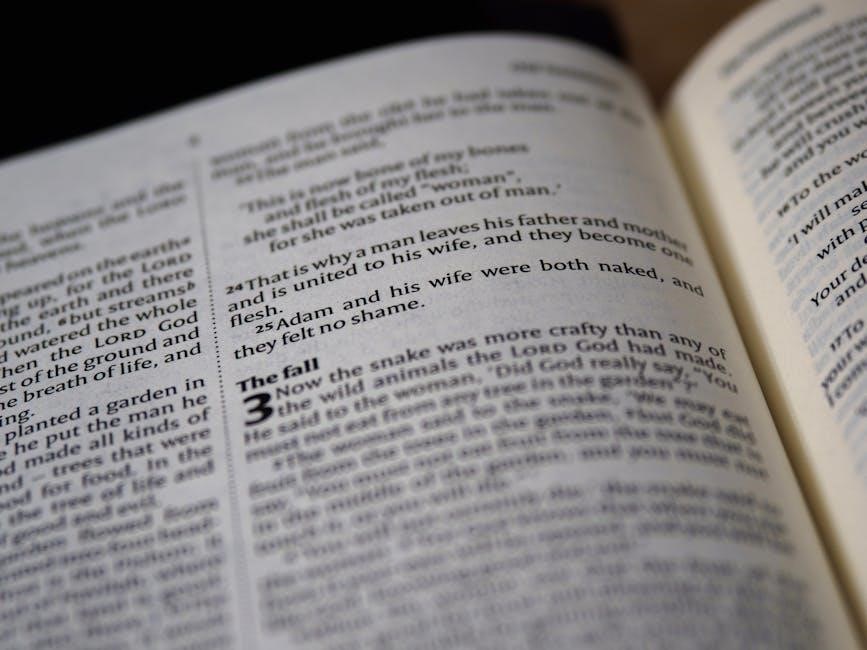
The Fall (Genesis 3) generates questions concerning the temptation, the consequences of disobedience, and the introduction of sin into the world․ Study materials explore the symbolism of the forbidden fruit, the roles of Adam and Eve, and the implications for human nature․

PDFs commonly utilize true/false and multiple-choice questions to assess comprehension of these foundational events, encouraging deeper engagement with the theological implications of creation and the fall․
III․B․ The Flood Narrative
Genesis chapters 6-9, recounting the Great Flood, are a prominent focus in Genesis study PDFs․ Questions frequently address the reasons for God’s judgment, the righteousness of Noah, and the details of constructing the Ark․ Materials often explore the symbolism of the flood as a cleansing and a new beginning․
Study guides commonly present questions about the scope of the flood – whether it was local or global – and its implications for understanding God’s justice and mercy․ True/false questions assess understanding of the covenant God made with Noah and the sign of the rainbow․
PDF quizzes often include inquiries about the animals saved, the duration of the flood, and the subsequent repopulation of the earth, testing detailed knowledge of the narrative’s specifics․
IV․ Genesis Study Questions: Focus on Early Chapters (1-11)
Early Genesis chapters (1-11) are foundational and heavily featured in study materials․ PDFs dedicated to these chapters typically include questions examining the creation accounts, the fall of humanity, the stories of Cain and Abel, and the lineage from Adam to Noah․ Multiple-choice questions assess comprehension of key events and theological concepts․
A significant portion of questions revolves around the nature of God’s creation, the meaning of the Garden of Eden, and the consequences of disobedience․ True/false questions test understanding of the differences between the two creation narratives in Genesis 1 and 2․
Study resources also delve into the spread of sin, the introduction of death, and the escalating wickedness that led to the Flood, prompting reflection on humanity’s relationship with God․
IV․A․ Questions Regarding Creation Accounts (Genesis 1 & 2)
PDF study guides frequently pose questions comparing and contrasting the two creation accounts in Genesis 1 and 2․ These questions often explore the differing emphasis – Genesis 1 focusing on the grand scope of creation and Genesis 2 offering a more intimate, anthropocentric perspective․
Multiple-choice questions might ask about the order of creation, the significance of the Sabbath, or the meaning of “Let us make mankind in our image․” True/false questions test understanding of whether the accounts present contradictory information or complementary details․
Further inquiries explore the nature of light before the sun, the purpose of the Garden of Eden, and the roles of Adam and Eve․ These questions aim to foster a deeper understanding of God’s creative power and His relationship with humanity․
IV․B․ Questions on Cain and Abel (Genesis 4)
Genesis study PDFs commonly include questions dissecting the story of Cain and Abel, focusing on the reasons for God’s rejection of Cain’s offering and the implications of fratricide․ Multiple-choice questions often probe the nature of sin and its consequences, as demonstrated in this early biblical narrative․
True/false questions assess comprehension of whether Cain’s anger was justified, or if he had a choice in his actions․ Study materials frequently ask about the symbolism of the offerings – Cain’s agricultural produce versus Abel’s animal sacrifice – and what they represent․
Inquiries also delve into God’s response to Cain’s crime, including the mark placed upon him and the subsequent exile․ These questions encourage reflection on themes of jealousy, righteousness, and God’s justice and mercy․
IV․C․ Questions About Noah’s Ark and the Flood (Genesis 6-9)
Genesis study PDFs dedicate significant attention to Noah’s Ark and the Flood narrative, posing questions about the reasons for God’s decision to send a global deluge․ Multiple-choice questions frequently explore the extent of the earth’s wickedness and the specific sins that prompted divine judgment․
True/false questions test understanding of the Ark’s dimensions, the animals Noah was instructed to save, and the duration of the flood․ Study guides often ask about the symbolism of the flood – purification, new beginnings – and its connection to baptism in Christian theology․
Further inquiries examine the covenant God made with Noah, signified by the rainbow, and its implications for humanity․ These questions encourage reflection on themes of obedience, faith, and God’s enduring promise․
V․ Genesis Study Questions: The Patriarchal Narratives (12-50)
Genesis study PDFs extensively cover the lives of Abraham, Isaac, Jacob, and Joseph, framing questions around their pivotal roles in God’s plan․ Multiple-choice questions often focus on Abraham’s call, the covenant established with him, and the test of his faith at Mount Moriah․
True/false questions assess comprehension of the promises made to Abraham – land, descendants, and blessing – and the challenges he faced․ Study materials delve into the complexities of Isaac and Jacob’s relationships, including sibling rivalry and divine encounters․
Questions regarding Joseph explore themes of betrayal, forgiveness, and providence, examining his journey from slavery to power in Egypt․ These inquiries aim to deepen understanding of God’s faithfulness and sovereignty throughout the patriarchal narratives․
V․A․ Questions Concerning Abraham’s Call and Covenant (Genesis 12-25)
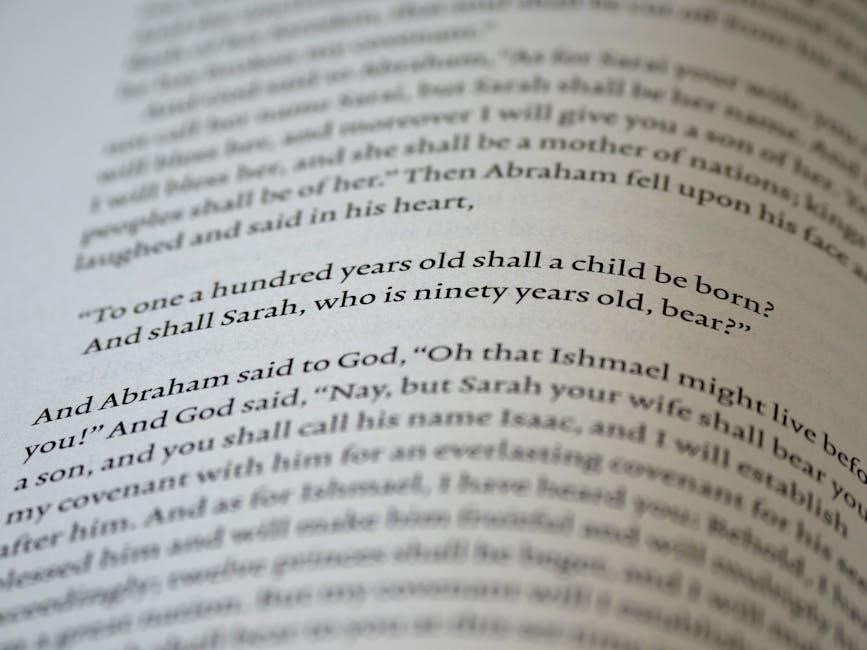
Genesis study PDFs pose questions regarding God’s initial call to Abraham (then Abram) in Genesis 12, probing the significance of leaving his homeland․ Multiple-choice questions assess understanding of the covenant God establishes – promising land, descendants, and blessing – and its unconditional nature․
True/false questions examine Abraham’s obedience, particularly his willingness to leave Ur, and the challenges he faced, such as famine in Canaan․ Study guides explore the implications of the covenant sign of circumcision and Abraham’s faith demonstrated through his willingness to sacrifice Isaac․
Inquiries also focus on the narratives of Hagar and Ishmael, Lot’s separation from Abraham, and the reaffirmation of the covenant, testing comprehension of God’s promises and Abraham’s responses․

V․B․ Questions on Isaac and Jacob (Genesis 26-36)
Genesis study PDFs frequently include questions about Isaac’s life, focusing on his continuation of the covenant promise and his passive nature compared to Abraham․ Multiple-choice questions assess understanding of the conflicts over wells and Isaac’s reaffirmation of the covenant with Abimelech․
True/false questions explore the story of Jacob and Esau, examining the significance of the birthright and Jacob’s deception․ Study guides delve into Jacob’s dream at Bethel, his service to Laban, and the birth of his twelve sons․

Inquiries also center on Jacob’s wrestling match with God, his name change to Israel, and the complex family dynamics within his household, testing comprehension of God’s faithfulness and Jacob’s character development․
V․C․ Questions About Joseph and His Brothers (Genesis 37-50)
Genesis study PDFs dedicate significant attention to Joseph’s narrative, posing questions about his brothers’ jealousy and the sale into slavery․ Multiple-choice questions assess understanding of Joseph’s interpretations of dreams, both in Egypt and for his fellow prisoners․
True/false questions examine the providence of God in Joseph’s rise to power and his eventual reconciliation with his family․ Study materials explore the famine in Canaan, Jacob’s journey to Egypt, and the themes of forgiveness and redemption․
Inquiries often focus on the character of Joseph, his unwavering faith, and the ultimate purpose of his suffering․ PDFs also test knowledge of the details surrounding Pharaoh’s dreams and Joseph’s administrative skills, highlighting God’s sovereignty․
VI․ Common Question Types in Genesis PDFs
Genesis Bible study PDFs frequently employ a variety of question formats to reinforce learning․ Multiple-choice questions are prevalent, testing recall of key events, characters, and geographical locations within the Genesis narrative․ These often require discerning the most accurate answer from several options․
True/false questions are also common, assessing comprehension of specific details and theological concepts presented in the text․ These demand careful reading and critical thinking to identify inaccuracies․
Short answer and essay questions may appear in more comprehensive study guides, encouraging deeper engagement with the material and promoting analytical skills․ Some PDFs incorporate matching exercises and fill-in-the-blank questions for varied assessment․
Quizzes often cover people, places, events, and details from the book, ensuring a thorough understanding of Genesis․
VI․A․ Multiple Choice Questions

Multiple choice questions within Genesis study PDFs are designed to assess understanding of narrative details and theological implications․ A typical question might ask: “What was the primary purpose of God’s covenant with Noah?” with options like “To destroy all life,” “To establish a new creation,” “To punish humanity,” or “To test Noah’s faith․”
These questions frequently focus on identifying the correct sequence of events, recognizing key characters’ roles, or interpreting symbolic language․ Another example could be: “Which of the following best describes the significance of the Tower of Babel?” with choices relating to pride, language diversity, or divine judgment․
Effective multiple-choice questions require careful consideration of all options, not just identifying the correct answer, but also understanding why the other choices are incorrect․ They test recall and analytical skills․

VI․B․ True/False Questions
True/False questions in Genesis study PDFs serve as a quick assessment of foundational knowledge․ An example question might state: “God regretted creating humankind after the Flood․” – requiring a student to recall the narrative accurately․ These questions often target specific details, like the ages of patriarchs, the lineage of key figures, or the precise terms of covenants․
Effective True/False questions avoid ambiguity and require a definitive answer based on the text․ A poorly worded question could be: “Abraham was a perfect man․” – as ‘perfect’ is subjective․ Better: “Abraham demonstrated unwavering faith in God’s promise of a son․”
The value of True/False questions lies in their ability to quickly identify areas where further study is needed․ They encourage close reading and attention to detail within the Genesis account․
VII․ Resources for Genesis Bible Study PDFs
Numerous online platforms offer Genesis study materials in PDF format․ Websites dedicated to biblical studies frequently provide downloadable question sets, commentaries, and outlines․ The Deutscher Genesis Fanclub forum, while focused on the band Genesis, demonstrates a community interest in detailed exploration and discussion – potentially leading to shared study resources․
BibleProject offers visually engaging videos and accompanying resources that can supplement PDF study guides․ Various seminaries and theological institutions also make study materials available online, often including Genesis-specific PDFs with in-depth questions․
Searching for “Genesis Bible study PDF” yields a wealth of options, ranging from simple question-and-answer formats to comprehensive workbooks․ Remember to evaluate the source for theological soundness and accuracy before relying on any particular resource․
VIII․ Utilizing Genesis Study Questions for Deeper Understanding
Employing Genesis study questions, particularly those found in PDF formats, moves beyond simple reading to active engagement with the text․ Answering questions forces careful consideration of narrative details, theological implications, and historical context․
Multiple-choice and true/false questions, common in these PDFs, test recall and comprehension․ However, more open-ended questions encourage critical thinking and personal application․ Analyzing the questions themselves reveals the interpreter’s biases and assumptions․
Utilize study questions in conjunction with commentaries and other resources to broaden your understanding․ Discussing questions with others – in a small group or online forum – fosters diverse perspectives․ Ultimately, the goal is not merely to find the “right” answer, but to cultivate a richer, more nuanced relationship with the Genesis narrative․
Leave a Reply
You must be logged in to post a comment.